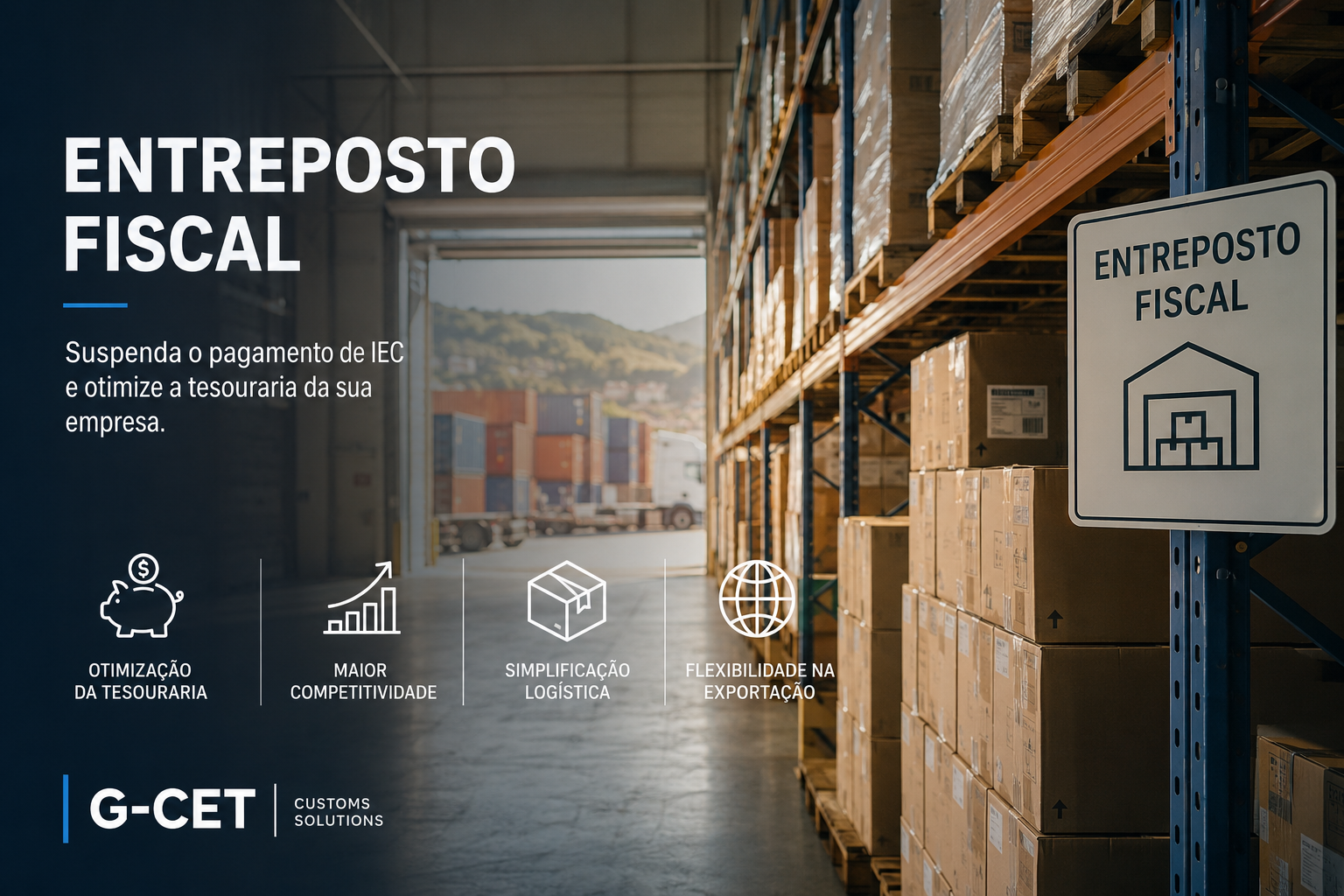
A Tax Warehouse suspends excise duties until goods are released for consumption, freeing up cash flow and simplifying logistics for alcohol, tobacco and fuels.
For companies producing, importing or trading goods subject to Excise Duties — alcohol, sugared beverages, tobacco and petroleum products — stock management carries a hidden financial risk: paying taxes before you even sell.
A Tax Warehouse is designed to solve this. Yet its practical mechanics and business impact are not always well understood.
What is a Tax Warehouse?
A Tax Warehouse is a facility (a warehouse or factory) authorised by the Portuguese Tax and Customs Authority where goods subject to excise duties can be produced, processed, stored, received or dispatched under duty suspension. Excise duty only becomes payable when the goods leave the warehouse for release for consumption.
Practical benefits
Cash-flow optimisation — no duty paid on inbound goods; excise is settled only when goods are released for consumption.
Competitiveness — deferring the tax frees up liquidity for operations and growth.
Logistics simplification — hold large stock volumes without immediate excise burden.
Export and intra-EU flexibility — goods sold to another EU Member State or exported outside the EU remain under suspension and are never charged in Portugal.
Who can benefit
Producers and distributors seeking lower operating costs and improved liquidity.
Importers and exporters moving goods between the national, EU and third-country markets.
How G-CET supports you
Setting up and running a Tax Warehouse requires strict compliance, customs guarantees and ongoing filings. G-CET handles the full lifecycle:
Feasibility study and operational framing;
Application to the competent Customs Office;
Calculation and monitoring of customs guarantees;
Documentation control (e-DIC / e-DA);
Continuous advisory.
Optimise your company's tax management
Understanding the Tax Warehouse is the first step to turning taxation from an obstacle into a lever for efficiency and growth. Talk to the G-CET team and we will assess the ideal framework for your business.